
How to Get Over Your Fear of Needles
Table of Contents

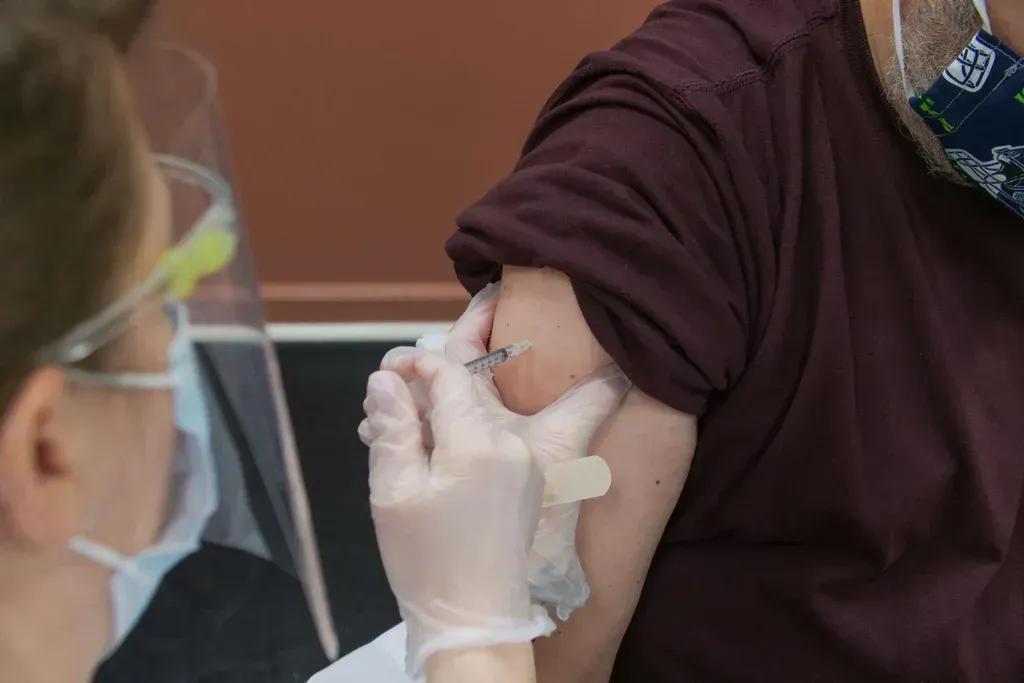
Whether it’s for a blood test, vaccination, or IV treatment, most people would rather avoid getting stuck by a needle. But for many, it’s more than just discomfort and their fear poses a real problem. In this article, you can read more about trypanophobia and how to overcome your fear of needles.
What Is Trypanophobia?
Trypanophobia is an extreme fear of needles used in medical procedures. The name comes from the Greek terms trypano —meaning piercing or puncturing—and phobia , meaning fear.
Like all other phobias, trypanophobia is classified as an anxiety disorder. The difference between rational needle fear and trypanophobia is the level of anxiety caused by needles. For example, if your aversion to needles causes you to avoid routine medical checkups or not take the medicines you need to manage an illness, it’s a sign of a phobia, rather than a normal fear.
Unlike general anxiety disorders, trypanophobia is a specific phobia triggered by an object, in this case, needles.
How common is trypanophobia?
Trypanophobia is a common problem that affects an estimated 10% of the American population. Statistics show that up to 60% of children have a phobia of needles, but for some, this fear continues into adulthood.
Types of trypanophobia
There are four different types of trypanophobia with slightly different symptoms: vasovagal, associative, resistive, and hyperalgesic. Some people might have more than one type of trypanophobia.
- Vasovagal trypanophobia: The most common type, affecting roughly 50% of people with a fear of needles. If you have this, you may become dizzy, lightheaded, or faint at the sight of a needle.
- Associative trypanophobia: Occurs in people who associate medical procedures that involve needles with a negative past experience.
- Resistive trypanophobia: Causes people with a fear of needles to become resistant or aggressive during a blood draw, injection, or intravenous treatment.
- Hyperalgesic trypanophobia: Occurs in people with an inherited hypersensitivity that causes injections to be more painful.
Impacts of trypanophobia
People who have a severe fear of needles may refuse vaccines, flu shots, and blood work necessary for monitoring their health. This may increase the risk of infections or cause a delay in medical treatments. Avoiding recommended tests and treatments due to the fear of needles can lead to missed diagnoses, neglected medical conditions, and undertreatment.
Moreover, if you suffer from trypanophobia, you may experience severe anxiety that impacts your mental health and your quality of life in general.
How is trypanophobia diagnosed and treated?
In order to diagnose trypanophobia, your healthcare provider will start by performing a physical exam to rule out any disorder or illness that might be contributing to your fear. The doctor will ask questions about your symptoms, their nature, severity, and duration. In general, to be diagnosed with a specific phobia, your symptoms must be extreme, occur immediately in response to the feared object, last for more than six months, and limit your ability to function normally.
Needle phobias can be treated with therapy, medication, or a combination of the two.
Symptoms of Trypanophobia
The general symptoms of trypanophobia are the same as those for other specific phobias and involve:
- Trembling or shaking
- Racing heart rate
- Feeling sweaty or cold
- Nausea
- Muscle tension
- Headaches
- Loss of appetite
- Insomnia
- Inability to concentrate
- Dizziness
- Feeling light-headed
- Drop in blood pressure that could potentially result in fainting
- Hyperventilating
- Inability to breathe
- Restlessness
- Panic attacks
The anxiety can be triggered both by the feeling of a needle prick, the sight of needles, or by merely thinking about needles.
Symptoms that are specific to trypanophobia include:
- Persistent fear of needles that lasts for six months or more
- A fear of needles that is disproportionate to the actual risk or danger
- Exaggerated fear responses provoked by needles
- Tendency to avoid situations involving needles
- Fear that is severe enough to cause distress or impairment
Causes of Trypanophobia
Trypanophobia can affect anyone. The cause of this phobia is often unknown, but some common factors that lead to the development of the condition may include past experiences, personality traits, as well as genetics and family history.
Past experiences
- Negative experiences including childhood phobias or past traumas involving needles or medical procedures can cause trypanophobia.
- Memories of painful injections can be triggered by the sight of a needle.
- Parents’ responses to injections may play a role in the development of fear of needles in children.
- Vicarious trauma: Some people become afraid of needles after hearing about a traumatic experience from another person.
- Trypanophobia is common in people who have chronic conditions that require injections, such as diabetes.
Personality traits
- People with sensitive and negative temperaments are more likely to suffer from trypanophobia.
- It is normal to develop a fear of unknown situations; people who rarely get injections may be more afraid than those who have more experience.
Genetics and family history
- Research shows that an estimated 80% of adults who suffer from trypanophobia have a first-degree relative that suffers from the same condition.
- Some people may experience a vasovagal response (fainting) to having their skin pierced by a needle, and this reflex tends to run in families.
- Hypersensitivity to pain may be genetic.
- Researchers have found genes linked to fainting after needle sticks, which means that this condition may run in families.
Tips on Overcoming Your Fear of Needles
- Bring a friend or a family member with you to help you remain calm during your appointment.
- Look away when you get an injection. Try to distract yourself with music or focus on something else in the room.
- Tell your doctor that you are afraid of needles and ask for an experienced provider.
- Ask for a topical anesthetic (like lidocaine) or ethyl chloride spray to reduce sensitivity.
- Practice relaxation techniques like deep breathing or meditation before your appointment.
- If you’ve fainted in the past, lie down during the procedure.
- Tense up your muscles to help prevent light-headedness, dizziness, and fainting.
- Focus on the benefits of getting the injection and remind yourself why it’s important.
